Fibre channel
همانند Ethernet یک پروتکل لایه دو است و همانگونه که Ethernet دارای Port type یا به عبارت دیگر دارای Switch port mode می باشد( مانند Mode های Accessو Trunk و Auto ) Fibre channel نیز دارای Port type های مختلف می باشد. قسمتی از این port type ها بر روی Storage تنظیم می شود. اما قسمت اصلی آن نیز بر روی Fabric switch تنظیم می شود که بین ساختار Storage و سرورها قرار می گیرد.
انواع port type ها در fibre channel:
- N- port: پورتی است که بر روی Node قرار دارد که برای اتصال به Fabric Switch مورد استفاده قرار می گیرد. معمولا یک پورت HBA است
- F- port: پورت fabric switch است که به node وصل شده است
- L-port پورت هایی هستند که قابلیت برقراری ارتباط (AC-AL) arbitrated loop را دارا می باشند. این پورت ها به دو دسته تقسیم می شوند:
الف- NL-port: پورتی است که بر روی یک node قرار دارد و در Topology از نوع arbitrated loop برای اتصال به node دیگر و یا یک Hub خود استفاده قرار می گیرد.
در این نوع Send Portیک Node، به Receive port یک Node دیگر متصل می شود.
ب- FL- port پورتی است که بر روی یک fabric switch قرار دارد و برای اتصال به یک hub در ساختار arbitrated loop مورد استفاده قرار می گیرد
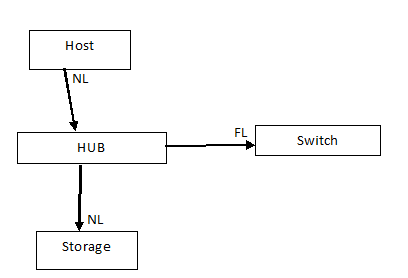
نکته 1 : connector های روی Hub به مفهوم پروتکلی ، port محسوب نمی شوند.
نکته 2: یک ساختار arbitrated loop، که در آن fabric switch وجود نداشته باشد (به عبارت دیگر پورت FL وجود نداشته باشد) private loop نامیده می شود و ساختار arbitrated loop ، که در ان fabric switch وجود داشته باشد (به عبارت دیگر پورت fl وجود داشته باشد) public loop نامیده میشود.
E-port (Expansion): این پورت برای اتصال چند fabric switch به یکدیگر ، مورد استفاده قرار می گیرد. (مشابه حالت Trunk )
(generic)G- port : این پورت مانند پورت auto در Ethernet عمل می کند. بر روی switch قرار دارد و می تواند به عنوان یک E-port یا یک F-port عمل نماید. این پورت به صورت اتوماتیک ، نوع Device متصل به خود را تشخیص می دهد. اگر تشخیص بدهد که Device متصل شده به آن ، یک fabric switch دیگر است. در حالت E قرار می گیرد و در غیر اینصورت در حالت F قرار می گیرد.
SD-port (Span destination ) : این پورت مشابه قابلیت span (switch port analyzer) در cisco است. با استفاده از این قابلیت می توان دریافت که بر روی یک پورت ، یک مدل خاص از ترافیک مورد نظر ، وارد یا خارج می شود یا خیر به این منظور پورتی را که می خواهیم آنالیز کنیم بر روی پورت Mirror، SDمی نماییم.
نکته : اگر این دو پورت برروی دو Switch جداگانه قرار داشته باشند ، باید Run، RSPAN(Remote SPAN)شود .(CCNP switch)
- در EVA این type ها مشخصا وجود دارد اما در MSA سه حالت :auto،point to point و loop وجود دارد. که اگر بخواهیم پورت را به fabric switch متصل کنیم ، آن را در حالت auto و اگر بخواهیم به host متصل کنیم. در حالت point to point قرار می دهیم.(از loop هم که که امروزه استفاده نمی شود)
- Storage و host هر دو Node محسوب می شوند.
- در یک Esxi host ، در قسمت configuration ، قسمت storage adapters ها WWN یا IQN های (مربوط به iscsi) متعلق به آن host (بسته به اینکه host دارای HBA و کارت شبکه Ethernet باشد) ، لیست شده اند (wwn های مربوط به HBA های متصل به host و iqn های مربوط به کارت های شبکه های Host )
- اگر سرور ویندوزی باشد باید یک Application خاص بر روی آن نصب شود تا بتوان لیست HBA ها و wwn های متصل به آنها را مشاهده کرد.
- اگر از لحاظ Zone، Fabric Switchهای مختلف ایجاد نشده باشد و Vsan ایجاد نشده باشد، آنگاه SAN controller می تواند HBA سرورها و wwn آنها را Detect نماید.
- چند bit اول wwn یک HBA معروف کمپانی آن HBA است. یعنی برای تمامی HBA های آن کمپانی یکسان است.
- Segment نمودن Device ها (VSAN)
- همانند Vlan در VSAN، Ethernet به افزایش امنیت شبکه ، کمک می کند.
- الف- hardware zoning : در این مدل به صورت سخت افزاری تعدادی از پورت های یک fabric switch ، طوری پیکربندی می شوند که controller و HBA های متصل به آنها بتوانند تنها به یکدیگر Packet ارسال کنند. (مانند Vlan)
- ب- software zoning : در این مدل می توان تعیین نمود که یک LUN تنها از طریق یک controller و یا از طریق یک پورت خاص آدرس دهی شود و سرویس دهی نماید.
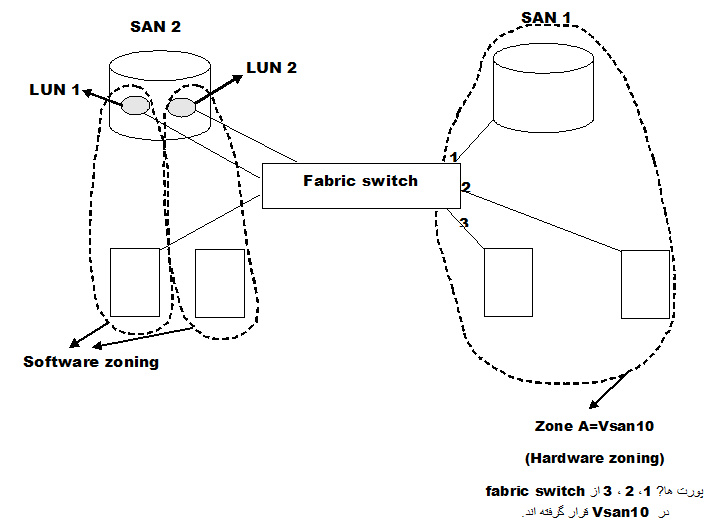
- یک San storage را در نظر می گیریم که دارای دو controller است و هر controller دارای دو پورت می باشد. با استفاده از hardware zoning و پیکربندی پورت های fabric switch ، می توان تعیین نمود که هر سرور تنها به controller مورد نظر متصل شود (VSAN) اما اگر SAN storageدارای چند LUN باشد با اینکه سرورها با ایجاد Vsan ، تنها به controller مورد نظر متصل می شوند اما در نهایت قادر به اتصال به تمامی lun های روی san storage هستند. برای اینکه هر سرور بتواند تنها به lun مورد نظر متصل شود باید بر روی San Storage، عملیات Lun Masking یا Lun Mapping انجام شود . بدین معنی که san storage طوری پیکربندی شود که Lun مورد نظر را از طریق controller مورد نظر در اختیار قرار دهد و بدین ترتیب سروری که با آن controller در یک VSANقرار دارند ، تنها به آن LUNدسترسی خواهد داشت.
بنابراین بطور کلی می توان گفت برای اینکه یک سرور یا host قادر باشد تنها به LUNهای مورد نظر دسترسی داشته باشد:
- آن سرور یا host را با یکی از controller های san storage ، در یک Vsan قرار دهیم.
- Lun با Lunهای مورد نظر را با استفاده از Lun masking ، به آن controllerاختصاص می دهیم.
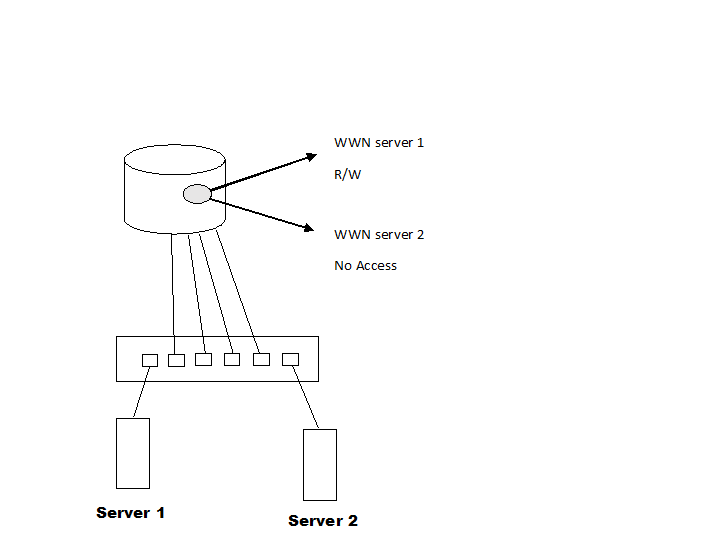
- در نوع دیگری از software zoning ، سرورهایی که با یک یا دو controller یک san storage ، در یک vsan قرار می گیرند، ابتدا به تمامی Lunهای آن san storage دسترسی دارند. انگاه می توان Lunمورد نظر را طوری پیکربندی نمود تا برای wwnیک سرور ، دسترسی read / write و برای wwnسرور دیگر ، دسترسی نداشته باشد
نکته ۲: HP به Volume، Lun می گوید. Fibre channel
Like Ethernet, it is a layer 2 protocol, and just as Ethernet has Port type or in other words has Switch port mode (like Access and Trunk and Auto modes), Fibre channel also has different Port types. Some of these port types are configured on Storage. However, the main part is configured on the Fabric switch, which is located between the Storage structure and the servers.
Types of port types in fibre channel:
- N-port: A port that is located on a Node and is used to connect to the Fabric Switch. It is usually an HBA port.
- F-port: The fabric switch port that is connected to the node.
- L-port: Ports that have the capability to establish communication (AC-AL) arbitrated loop. These ports are divided into two categories:
A- NL-port: A port that is located on a node and is used in a topology of the type arbitrated loop to connect to another node or a Hub.
In this type, the Send Port of one Node connects to the Receive port of another Node.
B- FL-port: A port that is located on a fabric switch and is used to connect to a hub in the arbitrated loop structure.
Note 1: Connectors on the Hub are not considered ports in the protocol sense.
Note 2: An arbitrated loop structure, where there is no fabric switch (in other words, no FL port), is called a private loop, and an arbitrated loop structure, where there is a fabric switch (in other words, an FL port exists), is called a public loop.
E-port (Expansion): This port is used to connect multiple fabric switches to each other (similar to Trunk mode).
(generic) G-port: This port acts like the auto port in Ethernet. It is located on the switch and can function as an E-port or an F-port. This port automatically detects the type of Device connected to it. If it detects that the connected Device is another fabric switch, it operates in E mode; otherwise, it operates in F mode.
SD-port (Span destination): This port is similar to the span capability (switch port analyzer) in Cisco. With this capability, it can be determined whether a specific model of desired traffic is entering or exiting a port. To do this, the port we want to analyze is mirrored to the SD port.
Note: If these two ports are on two separate Switches, RSPAN (Remote SPAN) must be run. (CCNP switch)
- In EVA, these types are specifically present, but in MSA, there are three modes: auto, point to point, and loop. If we want to connect the port to the fabric switch, we set it to auto, and if we want to connect it to the host, we set it to point to point. (The loop mode is not used nowadays.)
- Both Storage and host are considered Nodes.
- In an ESXi host, in the configuration section, the storage adapters' WWN or IQN (related to iSCSI) belonging to that host (depending on whether the host has HBA and Ethernet network card) are listed (WWNs related to HBAs connected to the host and IQNs related to the host's network cards).
- If the server is Windows-based, a specific Application must be installed on it to view the list of HBAs and their connected WWNs.
- If no zones have been created among different Fabric Switches and no Vsan has been created, then the SAN controller can detect the servers' HBAs and their WWNs.
- The first few bits of the WWN of an HBA are the manufacturer's identifier of that HBA. This means it is the same for all HBAs of that manufacturer.
- Segmenting Devices (VSAN)
- Similar to VLAN in VSAN, Ethernet helps increase network security.
- A- hardware zoning: In this model, a number of ports on a fabric switch are configured in such a way that the controller and the HBAs connected to them can only send Packets to each other (like VLAN).
- B- software zoning: In this model, it can be determined that a LUN is addressed and serviced only through one controller or through a specific port.
- Consider a SAN storage that has two controllers, and each controller has two ports. By using hardware zoning and configuring the ports of the fabric switch, it can be determined that each server connects only to the desired controller (VSAN). However, if the SAN storage has multiple LUNs, even though the servers connect only to the desired controller by creating a Vsan, they are ultimately able to connect to all LUNs on the SAN storage. To ensure that each server can connect only to the desired LUN, Lun Masking or Lun Mapping operations must be performed on the SAN Storage. This means that the SAN storage must be configured to provide the desired LUN through the desired controller, and thus the server that is in the same VSAN with that controller will only have access to that LUN.
Therefore, it can be generally stated that for a server or host to have access only to the desired LUNs:
- Place that server or host with one of the controllers of the SAN storage in a Vsan.
- Assign the desired LUNs to that controller using Lun masking.
- In another type of software zoning, servers that are placed in a vsan with one or two controllers of a SAN storage initially have access to all LUNs of that SAN storage. Then, the desired LUN can be configured so that for the WWN of one server, read/write access is granted, while for the WWN of another server, access is denied.
Note 2: HP refers to Volume as LUN. 

دیدگاهها Comments
هنوز دیدگاهی ثبت نشده. No comments yet.